What to Do Immediately After Fire Damage
A fire can cause damage far beyond the area directly affected by flames. Smoke, soot, odors, damaged building materials, and water used during firefighting efforts can spread throughout the property.
Knowing what to do immediately after a fire can help protect people, reduce additional damage, and begin the restoration process.
1. Wait Until the Property Is Declared Safe
Do not enter a fire-damaged property until emergency officials confirm that it is safe.
Fire can weaken roofs, ceilings, floors, walls, stairways, and electrical systems. Areas that appear stable may still contain hidden hazards.
2. Contact Your Insurance Company
Report the loss as soon as possible and ask for your claim number and reporting instructions.
Questions to ask your insurance representative may include:
- What emergency work is authorized?
- What documentation is required?
- What is the deductible?
- Is temporary housing included?
- How should damaged contents be documented?
- Does the insurer require specific estimates or inspections?
3. Secure the Property
Broken windows, damaged doors, roof openings, and exposed areas may leave the property vulnerable to weather, animals, and unauthorized entry.
Professional emergency services may include:
- Board-up services
- Temporary roof protection
- Removal of unsafe debris
- Temporary fencing or access control
4. Avoid Cleaning Smoke and Soot Yourself
Smoke and soot residues can react differently depending on the material and type of fire.
Improper cleaning may spread residue or permanently damage walls, ceilings, furniture, flooring, and personal belongings.
Professional restoration technicians use cleaning methods selected for the affected surface.
5. Address Water Damage
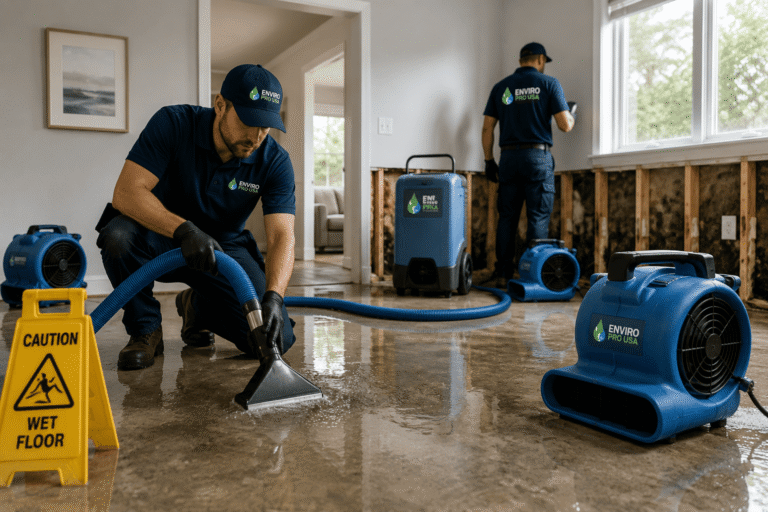
Water used to extinguish a fire may soak flooring, drywall, ceilings, insulation, furniture, cabinets, and structural materials.
Standing water should be removed, and wet materials should be dried promptly to help reduce further deterioration and mold growth.
6. Document the Damage
When it is safe, photographs and videos can help document the condition of the property.
Keep records of:
- Damaged rooms and building materials
- Furniture and personal belongings
- Emergency restoration work
- Temporary housing expenses
- Receipts and invoices
- Insurance emails and claim information
7. Contact a Professional Fire Restoration Company
A professional restoration company can inspect the property and develop a recovery plan based on the type and extent of damage.
Fire restoration services may include:
- Emergency damage assessment
- Board-up and roof protection
- Debris removal
- Water extraction and structural drying
- Smoke and soot cleaning
- Odor control
- Content evaluation and cleaning
- Repairs and reconstruction
Why Smoke Damage Requires Professional Cleaning
Smoke can travel through doorways, ventilation systems, wall cavities, and nearby rooms.
Soot may settle on surfaces that were never touched by flames, including:
- Walls and ceilings
- Air-conditioning vents
- Cabinets and closets
- Furniture and textiles
- Electronics and appliances
- Documents and personal belongings
Can Fire-Damaged Contents Be Restored?
Some contents may be cleanable depending on the material, type of residue, heat exposure, water damage, and overall condition.
Items should be evaluated before they are discarded whenever it is safe to do so.
Fire Restoration for Different Property Types
EnviroPro USA provides fire damage restoration for:
Contact EnviroPro USA
EnviroPro USA provides professional
fire damage restoration
for residential, commercial, and condominium properties.
Our services include emergency property protection, smoke and soot cleanup, odor treatment, water extraction, drying, repairs, and restoration.
For emergency assistance, call
(888) 555-2477
or
request a property inspection
.